
A Clearer Path with PET/CT Imaging
A PET/CT scan pairs functional and anatomical imaging in one exam, helping your care team see both how tissues are behaving and exactly where that activity is occurring. This combination makes PET/CT a valuable tool for guiding diagnosis, staging, and treatment planning.
What Is PET/CT Imaging?
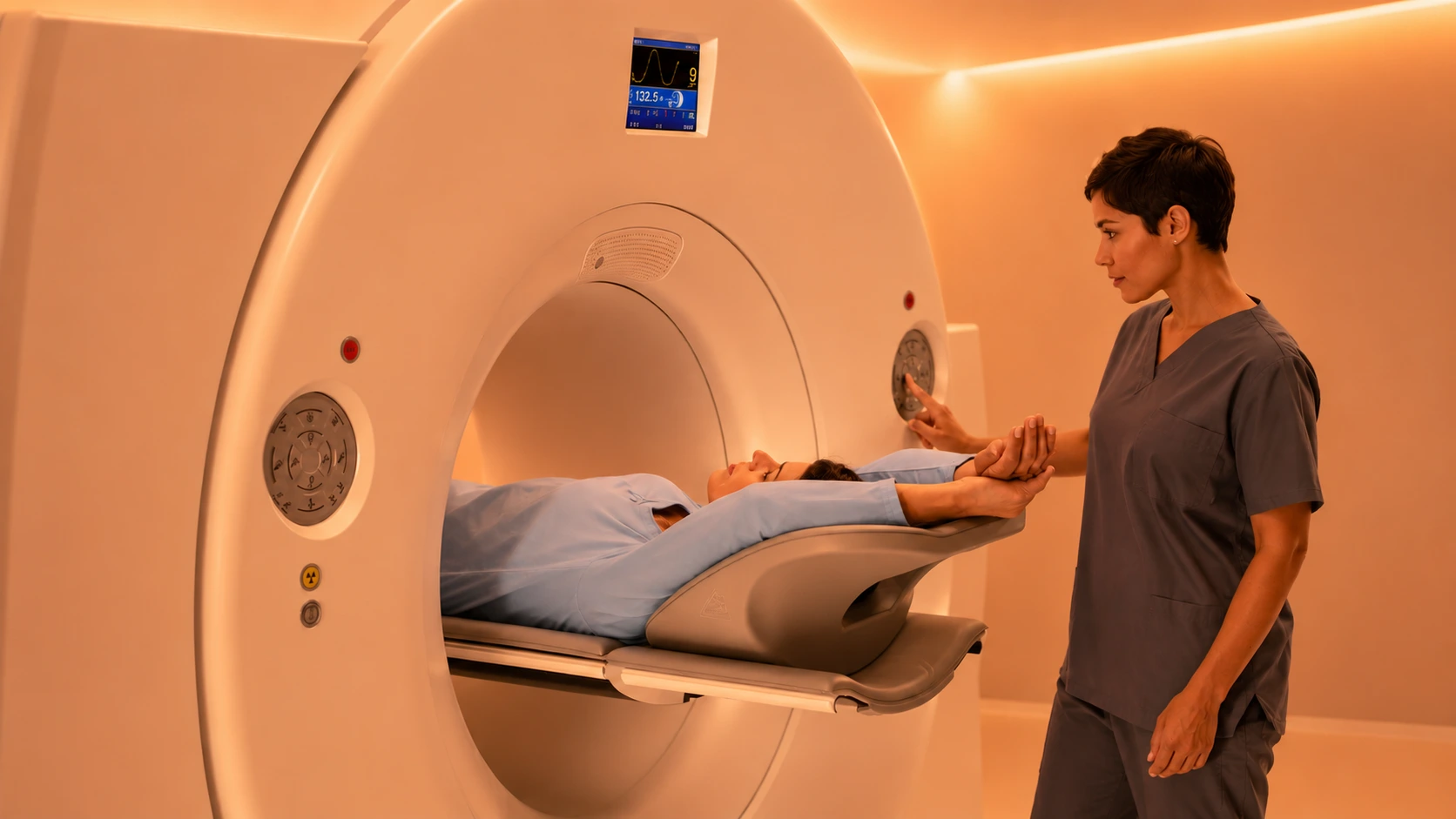
PET/CT stands for positron emission tomography combined with computed tomography. The PET portion shows molecular or metabolic activity from a radiotracer, while the CT portion helps localize that activity to specific anatomy. Together, this helps referring physicians and our on-site nuclear oncologists evaluate both biological behavior and anatomical location in one study. Depending on the clinical question, PET/CT may support diagnosis, staging, radiopharmaceutical therapy planning, treatment-response assessment, surveillance, or clarification of findings from other imaging exams.
PET/CT is not the right study for every patient or every clinical question. The appropriate exam depends on the patient’s medical history, symptoms, referring provider order, radiotracer availability, and the specific question being evaluated.
PET/CT with Diagnostic CT
PET/CT paired with Diagnostic CT gives referring physicians and patients more information from a single visit, which can improve both confidence and speed in decision‑making. When diagnostic CT is performed with PET/CT, the CT portion is performed and interpreted as a full, high‑quality anatomical study, which results in detailed structural staging and characterization alongside the physiologic PET findings. This can help clarify borderline findings (for example, distinguishing reactive from malignant nodes, or characterizing small lung nodules and liver lesions), reduce the need for separate standalone diagnostic CT appointments, and support more precise treatment planning and follow‑up. For patients, it often means fewer scans, fewer appointments, and a more comprehensive answer from a single, integrated exam.
Built for Referring Physicians Who Need Clear, Timely Imaging
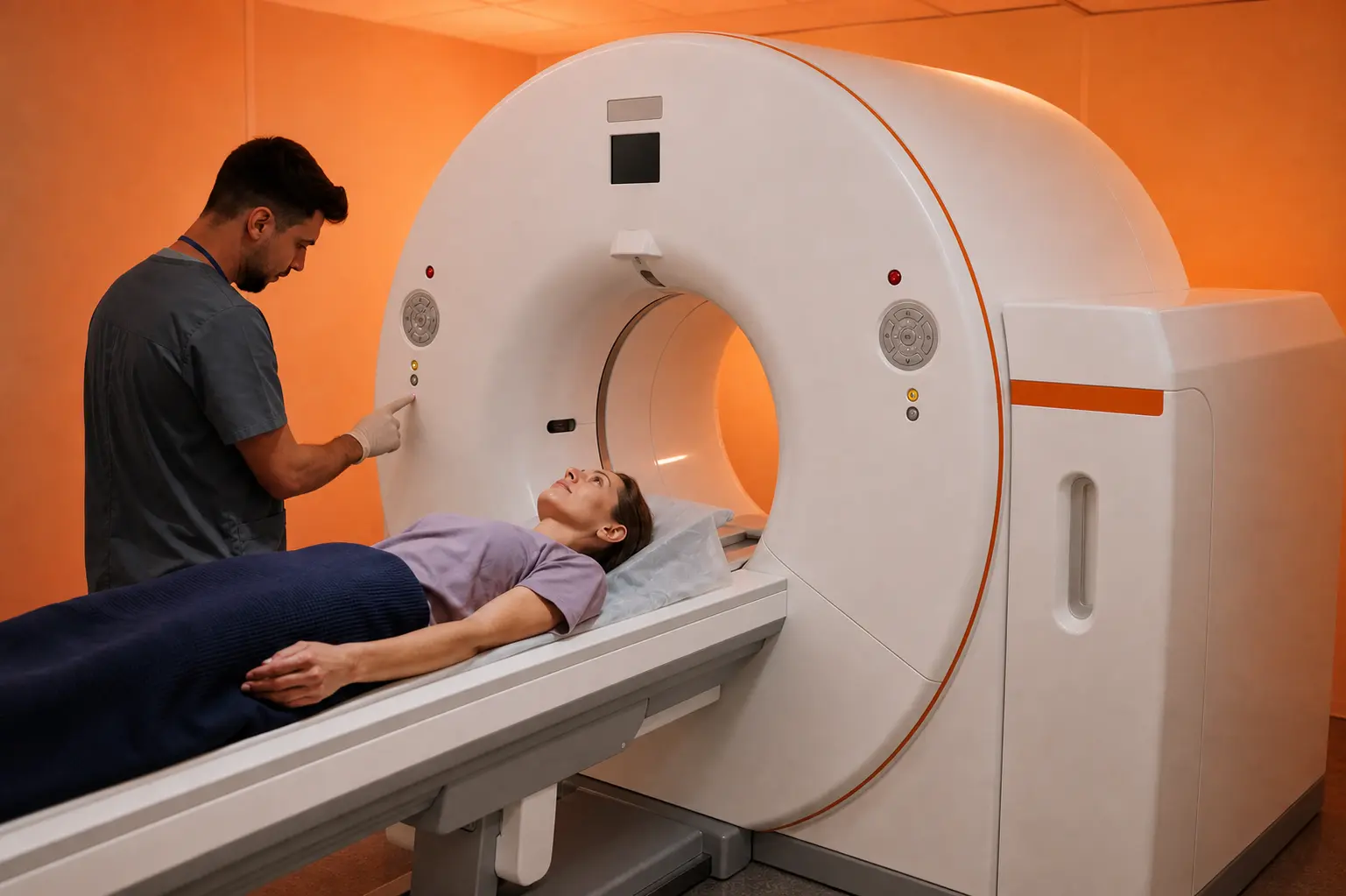
For referring physicians, PET/CT excels when the clinical question is molecular. It’s the study to reach for when the answer depends on metabolic activity, receptor-targeted signal, or disease behavior that anatomical imaging alone cannot resolve.
Our nuclear medicine physicians partner directly with your office to select the right radiotracer for the question you’re asking (FDG, PSMA, DOTATATE, or another target-specific agent) and interpret the study in the context of your patient’s care plan. We handle prior authorization before every appointment, with appointments typically available within 24–48 hours once pre-authorization is obtained and often same-day when appropriate.
Because United Theranostics operates the diagnostic and therapeutic sides of the theranostic pathway under one roof, PET/CT findings that qualify a patient for radiopharmaceutical therapy can move seamlessly into pre-treatment planning at one of our Nuclear Oncology Centers of Excellence™, with no lost time between the scan and the next step.
Clinical Uses of PET/CT Imaging
PET/CT supports a broad range of evaluations across molecular imaging. By combining radiotracer activity with CT localization, it can help referring physicians better understand disease behavior, clarify findings, and guide next steps in care.
Depending on the radiotracer and clinical indication, PET/CT may be used to evaluate:
Oncology evaluation, staging, and restaging
PET/CT is widely used in oncology because it can show areas of abnormal physiologic activity and localize those findings to CT anatomy. Depending on the disease type, radiotracer, and clinical question, PET/CT may support initial staging, restaging, recurrence evaluation, treatment planning, or assessment of disease extent.
Treatment response monitoring
PET/CT can help physicians evaluate how disease activity changes after treatment, especially when the question involves physiologic or receptor-based activity rather than anatomy alone.
This can be useful when anatomical changes lag behind biological response or when physicians need additional context to guide next steps.
Prostate cancer imaging
PSMA PET/CT may support evaluation of prostate cancer extent, recurrence, and selected treatment-planning questions when clinically appropriate.
For patients being considered for certain radiopharmaceutical therapy pathways, PET/CT may help connect molecular findings with eligibility and treatment planning.
Neuroendocrine tumor evaluation
Somatostatin receptor PET/CT may support evaluation of neuroendocrine tumors by identifying receptor-positive disease and helping physicians understand disease distribution.
This information can support staging, treatment planning, follow-up, and selected radiopharmaceutical therapy-related decisions.
Infection and inflammation imaging
FDG PET/CT may help localize inflammatory or infectious activity in selected clinical scenarios where functional information can add value.
It may be considered for complex cases involving suspected infection, inflammatory disease, postoperative anatomy, or findings that are difficult to characterize with structural imaging alone.
Cardiovascular evaluation
Neurologic evaluation
Selected PET/CT studies may support neurologic evaluation by assessing patterns of brain metabolism or other molecular activity.
Clinical uses may include certain tumor, seizure-related, cognitive, or other specialty questions when ordered by the referring physician.
Theranostic pre-treatment planning
PSMA PET/CT, DOTATATE PET/CT, and other target-specific studies help identify molecular targets, evaluate disease distribution, and connect imaging findings with potential radiopharmaceutical therapy pathways and treatment planning/simulation. Their role depends on the radiotracer, disease type, and treatment being considered.

What Patients Can Expect
A PET/CT appointment usually begins with a radiotracer injection. After the radiotracer is administered, there is typically a waiting period while it distributes in the body. The timing depends on the type of PET/CT study being performed.
During the scan, our patients will be asked to lie on a table while the scanner captures PET images and CT images. We ask our patients to remain as still as possible so that images can be aligned and interpreted accurately.
Preparation instructions vary by exam. Some PET/CT studies may require fasting, blood sugar guidance, medication instructions, or hydration instructions. Patients will always receive study-specific guidance before their appointment.
PET/CT Availability
PET/CT imaging is available through select UniThera Medical Imaging locations. Availability may vary by site, protocol, radiotracer supply, and clinical indication.
View our locations to find the UniThera Medical Imaging site most relevant to your patient or appointment request.
Standard of Care
Exceptional Support Before, During, and After Imaging
UniThera Medical Imaging is designed to make advanced imaging easier to access, easier to coordinate, and easier to trust.
Scheduling
Appointments are typically available within 24-48 hours, with same-day scheduling when available.
Authorization
Our team secures prior authorization before every appointment.
Access
Direct, convenient parking or valet service is available steps from our front door.
Support
A clinical support team helps patients and referring physicians move imaging forward.
FAQ
Frequently Asked Questions
Answers to common questions about PET/CT imaging, scheduling, referrals, preparation, and what patients can expect.
What is PET/CT imaging?
How is PET/CT different from a regular CT scan?
Is PET/CT only used for oncology?
No. Oncology is an important use of PET/CT, but PET/CT may also support select neurologic, cardiovascular, infectious, inflammatory, and other physiologic imaging questions.
Do patients need a physician referral?
How quickly can PET/CT imaging be scheduled?
Appointments are typically scheduled within 24–48 hours once pre-authorization is obtained, often with same-day availability. Timing may depend on the radiotracer, protocol, insurance authorization, and location availability.
What preparation is needed before PET/CT?