
Diagnostic CT
Diagnostic CT uses X-rays and advanced computer processing to create detailed cross-sectional images of the body’s organs, bones, and tissues. These images give your care team a clear view of anatomy, helping to identify abnormalities and guide diagnosis, staging, and treatment planning.
What Is Diagnostic CT Imaging?
CT, or computed tomography, uses a rotating X-ray beam and computer processing to create detailed cross-sectional images of bones, organs, soft tissue, and blood vessels. These images can be viewed slice by slice or reconstructed into three-dimensional views, giving physicians a clear picture of internal anatomy.
Diagnostic CT can help physicians identify the cause of symptoms, evaluate the extent of disease, plan treatment or surgery, guide certain procedures, and monitor how a condition changes over time. Depending on the clinical question, a CT scan may be performed with or without contrast material to highlight blood vessels, organs, or specific tissue types.
CT is not the right study for every patient or every clinical question. The appropriate exam depends on the patient’s symptoms, history, referring provider order, and the specific diagnostic question being evaluated.

Built for Referring Physicians Who Need Timely Answers
UniThera Medical Imaging is designed to support physicians who need responsive scheduling, reliable coordination, and high-quality diagnostic imaging.
Our team helps referring offices move patients through the imaging process with fewer administrative barriers. Prior authorization is secured before the appointment whenever required, and appointments are typically available within 24 hours, with same-day scheduling when available.
For referring providers, diagnostic CT can be especially useful when a clinical question requires fast, detailed cross-sectional imaging, or when CT findings are needed to guide next steps such as biopsy, surgical planning, or further nuclear medicine and PET/CT evaluation.
Standard of Care
Built for Referring Physicians Who Need Timely Answers
UniThera Medical Imaging is designed to make advanced imaging easier to access, easier to coordinate, and easier to trust.
Scheduling
Appointments are typically available within 24 hours, with same-day scheduling when available.
Authorization
Our team secures prior authorization before every appointment.
Access
Direct, convenient parking is available steps from our front door.
Support
A clinical support team helps patients and referring physicians move imaging forward.
Clinical Uses of Diagnostic CT Imaging
Diagnostic CT supports a broad range of evaluations across specialties. Depending on the clinical indication, it may be used to evaluate:
Cancer detection, staging, and surveillance
Diagnostic CT can help identify and characterize masses in the chest, abdomen, and pelvis, and is often used to assess the size, location, and extent of a known or suspected tumor.
It is also commonly used for surveillance imaging after treatment, helping physicians monitor for recurrence or new findings over time, and is frequently performed alongside PET/CT for a more complete picture of disease activity.
Lung nodule and pulmonary evaluation
Chest CT provides detailed images of the lungs and surrounding structures, helping physicians evaluate incidental or suspicious lung nodules, infections, chronic lung disease, and other pulmonary findings.
Follow-up CT scans may be used to track how a nodule or finding changes in size or appearance over time, supporting decisions about whether further evaluation is needed.
Abdominal pain and gastrointestinal evaluation
CT of the abdomen and pelvis is frequently used to evaluate the cause of abdominal pain, including conditions affecting the appendix, gallbladder, bowel, kidneys, and other organs.
Contrast-enhanced studies can help distinguish between inflammatory, infectious, and structural causes, supporting timely diagnosis and treatment planning.
Kidney stones and urinary tract evaluation
Non-contrast CT is a common and effective way to detect kidney stones, evaluate their size and location, and assess for related complications such as obstruction.
CT may also be used to evaluate other urinary tract findings, including masses or structural abnormalities identified on prior imaging or during a clinical workup.
Trauma and acute injury assessment
In trauma or acute injury settings, CT can quickly evaluate for fractures, internal bleeding, organ injury, and other findings that require prompt attention.
The speed and detail of CT make it a valuable tool for assessing the extent of injury and helping guide urgent treatment decisions.
Musculoskeletal and joint evaluation
CT can provide detailed views of bones and joints, supporting evaluation of complex fractures, joint abnormalities, and bone lesions that may be difficult to characterize on X-ray alone.
It may also be used for surgical planning when precise anatomical detail is needed before a procedure.
Vascular evaluation with CT angiography
CT angiography uses contrast material to provide detailed images of blood vessels, helping physicians evaluate for blockages, aneurysms, and other vascular abnormalities throughout the body.
This can support evaluation of conditions affecting the aorta, peripheral arteries, and other vessels, and may help guide treatment planning.
Pre- and post-treatment planning
Diagnostic CT can help physicians plan procedures, surgeries, or radiation therapy by providing detailed anatomical information about the area being treated.
After treatment, follow-up CT can help assess healing, identify complications, and support ongoing care decisions.
Infection and inflammation evaluation
CT can help localize areas of suspected infection or inflammation, including abscesses, and provide anatomical detail that supports diagnosis and treatment planning.
This information can be especially useful when symptoms are unclear or when prior imaging has raised questions that need further evaluation.
Complementary imaging alongside PET/CT and SPECT/CT
Diagnostic CT findings often work hand in hand with our nuclear medicine services, providing the anatomical detail that complements the functional information from PET/CT and SPECT/CT.
For patients already receiving care through UniThera Medical Imaging, diagnostic CT can help round out a more complete diagnostic picture.
What Patients Can Expect
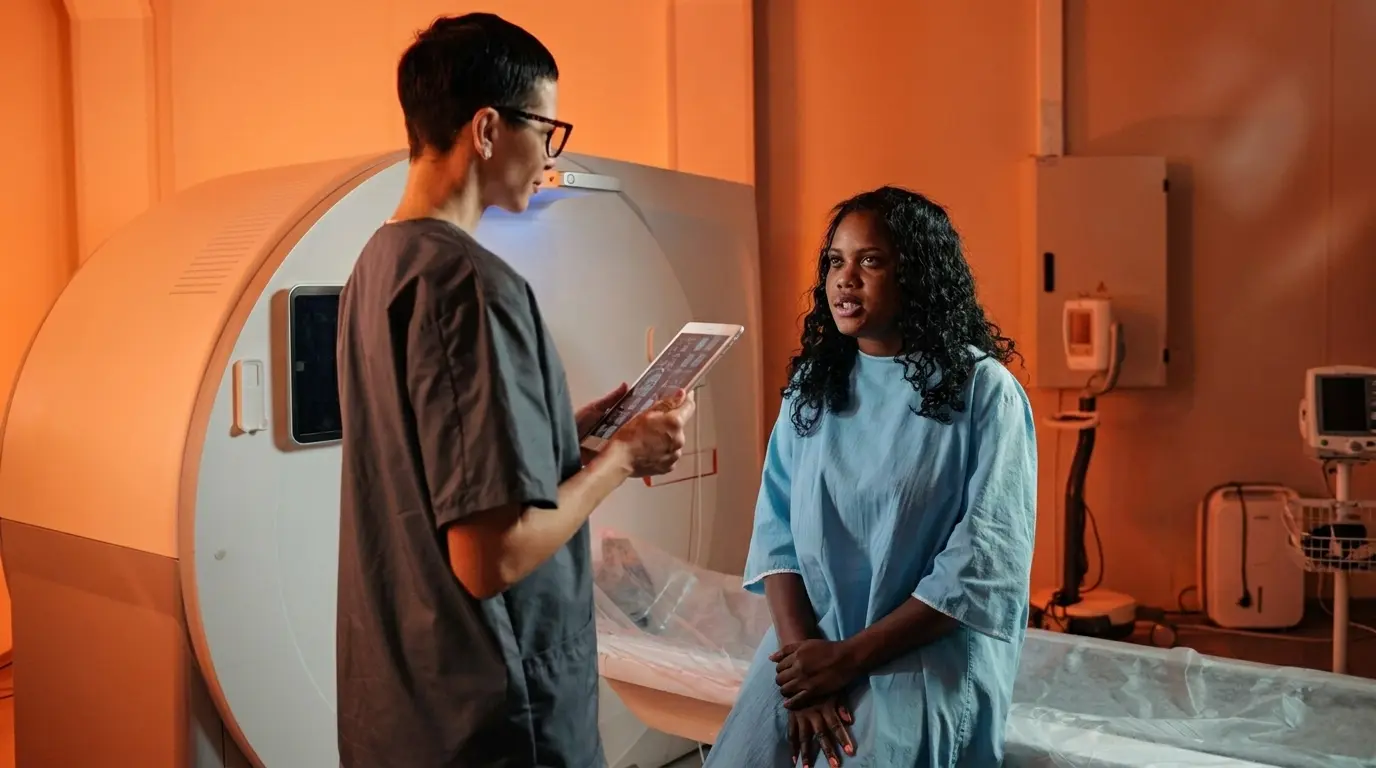
A diagnostic CT exam is typically quick, often taking just a few minutes for the scan itself, though the full appointment may take longer if contrast or preparation is required.
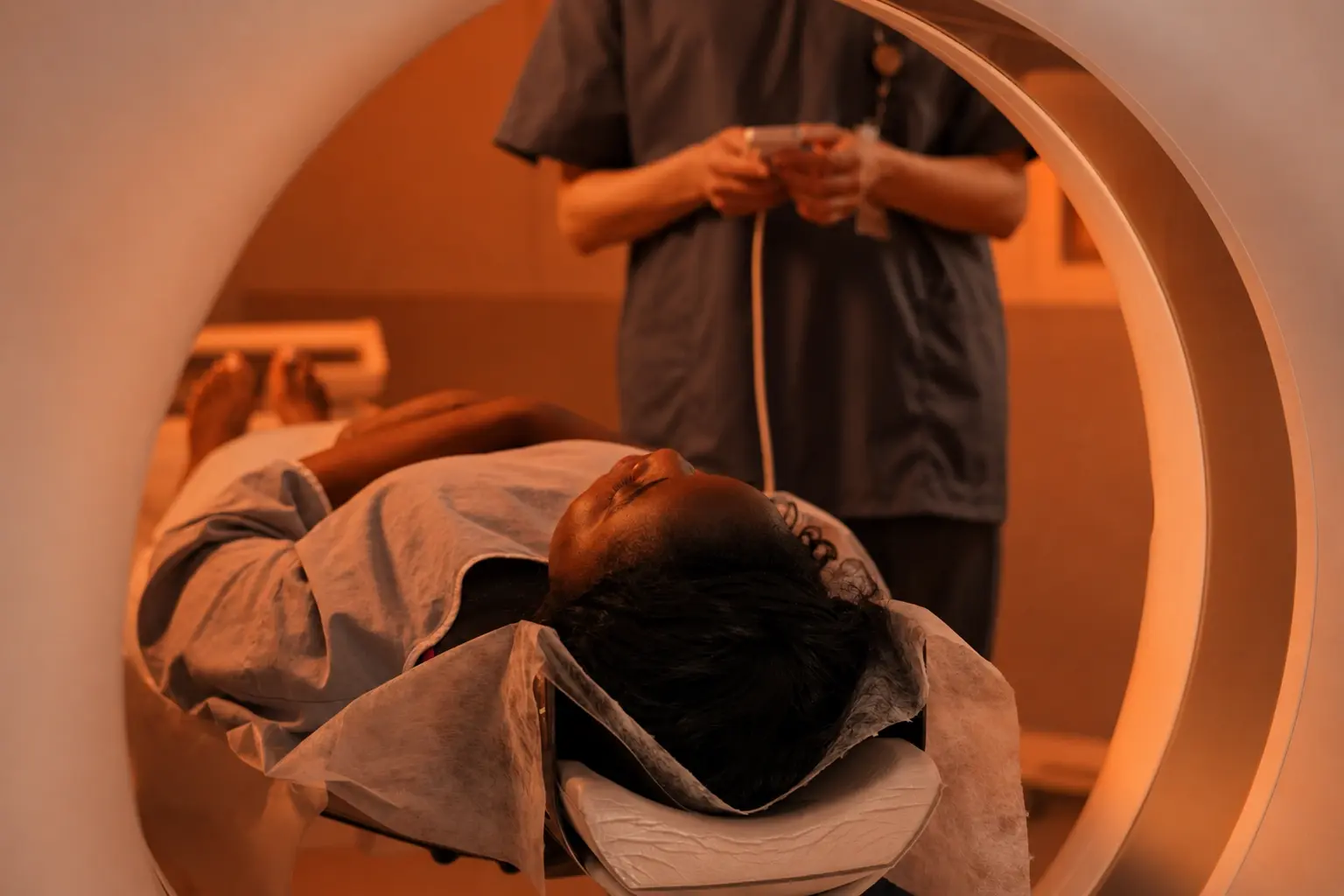
During the scan, the patient lies on a table that moves through a large, open ring-shaped scanner. The technologist may ask the patient to hold still or briefly hold their breath at certain points to keep the images clear. The exam is painless and noninvasive.
If contrast is part of the exam, it may be given by mouth, through an IV, or both, depending on the area being studied. Preparation instructions vary by exam type and will be provided before the appointment, including any guidance about food, medications, hydration, or arrival timing.
FAQ
Frequently Asked Questions
Answers to common questions about diagnostic CT imaging, scheduling, referrals, and what patients can expect.
What is a diagnostic CT scan?
A diagnostic CT scan uses X-rays and computer processing to create detailed cross-sectional images of the body, helping physicians evaluate bones, organs, soft tissue, and blood vessels.
How is CT different from PET/CT or SPECT/CT?
A standalone diagnostic CT shows detailed anatomy. PET/CT and SPECT/CT combine that anatomical information with nuclear medicine imaging to show how tissue is functioning, which can add useful clinical context for certain conditions.
Will I need contrast for my CT scan?
Some CT exams require contrast material to highlight blood vessels, organs, or specific tissue, while others do not. The referring provider determines the appropriate protocol based on the clinical question.
Do patients need a physician referral?
Most diagnostic CT studies require an order from a physician or qualified referring provider. Patients and referring offices can contact UniThera Medical Imaging for help with next steps.
How long does a CT scan take?
The scan itself is often just a few minutes, though the full appointment may take longer if contrast or additional preparation is required.
How quickly can diagnostic CT imaging be scheduled?
Appointments are typically available within 24 hours, with same-day scheduling when available.
Diagnostic CT Availability
Diagnostic CT imaging is available at most UniThera Medical Imaging locations. Availability may vary by site, protocol, and clinical indication.
View our locations to find the UniThera Medical Imaging site most relevant to your patient or appointment request.